Different voices, a shared theme.
7 selected excerptsThese are excerpts from edited written oral histories. Time expressions follow the accounts; memories are not automatically verified historical facts.
007Personal recollection1958
Arriving on Aiguo Road
In 1958, my mother, another elder sister and my nephew, then only eight and a half, travelled back with us by ship. After roughly ten days we entered through the Luohu crossing in Shenzhen and reached Guangzhou, where we rented a home on Aiguo Road.
Read the Chinese original English translation: draft
1958年,母亲、另一位姐姐和年仅八岁半的小外甥随我们一起坐船归国,历经大约十日,自深圳罗湖口岸入境广州,暂时在爱国路租赁房屋居住。
English translation is a draft awaiting human review.
New Village Memories: Oral Histories of Guangzhou’s Huaqiao Xincun · Lai Yunyun · p. 111 (PDF page 123)
008Personal recollectionPrimary and secondary school years
Like their own children
Most pupils at Huaqiao Primary School were children of returned overseas Chinese; many teachers were themselves returnees and cared for the pupils as if they were their own. At No. 21 Middle School, our classmates included both children of returnees and children from local working families. We got along well and remained in touch.
Read the Chinese original English translation: draft
华侨小学学生大多为归侨子女,老师亦多为归侨,对学生视如己出,关怀备至。升入二十一中后,同学中既有归侨子女,亦有本地工薪家庭子弟,大家关系融洽,至今仍有联系。
English translation is a draft awaiting human review.
New Village Memories: Oral Histories of Guangzhou’s Huaqiao Xincun · Lai Yunyun · p. 111 (PDF page 123)
012Personal recollectionSummer holidays during school years
Gardens and food shared together
During the summer holidays, the school organised study groups in selected classmates’ homes. In the spirit of Lei Feng, pupils often helped neighbours weed their gardens, expressing friendship and a willingness to work. Returned overseas Chinese families also frequently exchanged food and culture, sharing snacks from the countries where they had lived, including Southeast Asia and North America.
Read the Chinese original English translation: draft
暑假期间,学校组织学生至指定同学家中成立学习小组。同学们常践行雷锋精神,协助邻里清理花园杂草,展现团结友爱、热爱劳动之风尚。此外,归侨家庭间文化交流频繁,时常会分享各自侨居国的小吃,如东南亚或北美的特色美食。
English translation is a draft awaiting human review.
New Village Memories: Oral Histories of Guangzhou’s Huaqiao Xincun · Chen Congyuan · p. 125 (PDF page 137)
014Personal recollectionAdulthood; exact year unspecified
A voice practising at night
One night at three in the morning, I suddenly heard my grandmother practising her voice in her room and wondered why. The next day I asked her. She told me that reading the script had filled her mind with thoughts, making it hard to sleep, so she sang to relax.
Editorial contextThe narrator is Ma Jun. “My grandmother” refers to Hung Sin-nui; this is not her own direct testimony.
Read the Chinese original English translation: draft
有一天深夜三点,我突然听到奶奶在房间里练音,觉得很疑惑。第二天,我询问原因,她告诉我,看着剧本,思绪万千,难以入眠,便通过唱歌来放松。
English translation is a draft awaiting human review.
New Village Memories: Oral Histories of Guangzhou’s Huaqiao Xincun · Ma Jun · p. 74 (PDF page 86)
015Personal recollectionAccount after the residence opened to visitors
From home to a place of memory
My grandmother’s former home mainly presents scenes from her everyday life. It differs from the Hung Sin-nui Arts Center in Tianhe, which focuses on her achievements in Cantonese opera. People know about her contribution to the art, but much less about her life.
Read the Chinese original English translation: draft
红线女旧居主要展示奶奶的生活场景,与位于天河的红线女艺术中心有所不同,后者侧重于介绍她在粤剧艺术上的成就。大家都了解奶奶在粤剧艺术上的贡献,却对她的生活知之甚少。
English translation is a draft awaiting human review.
New Village Memories: Oral Histories of Guangzhou’s Huaqiao Xincun · Ma Jun · p. 76 (PDF page 88)
016Personal recollectionAfter moving in in 1956
Gardening beyond the studio
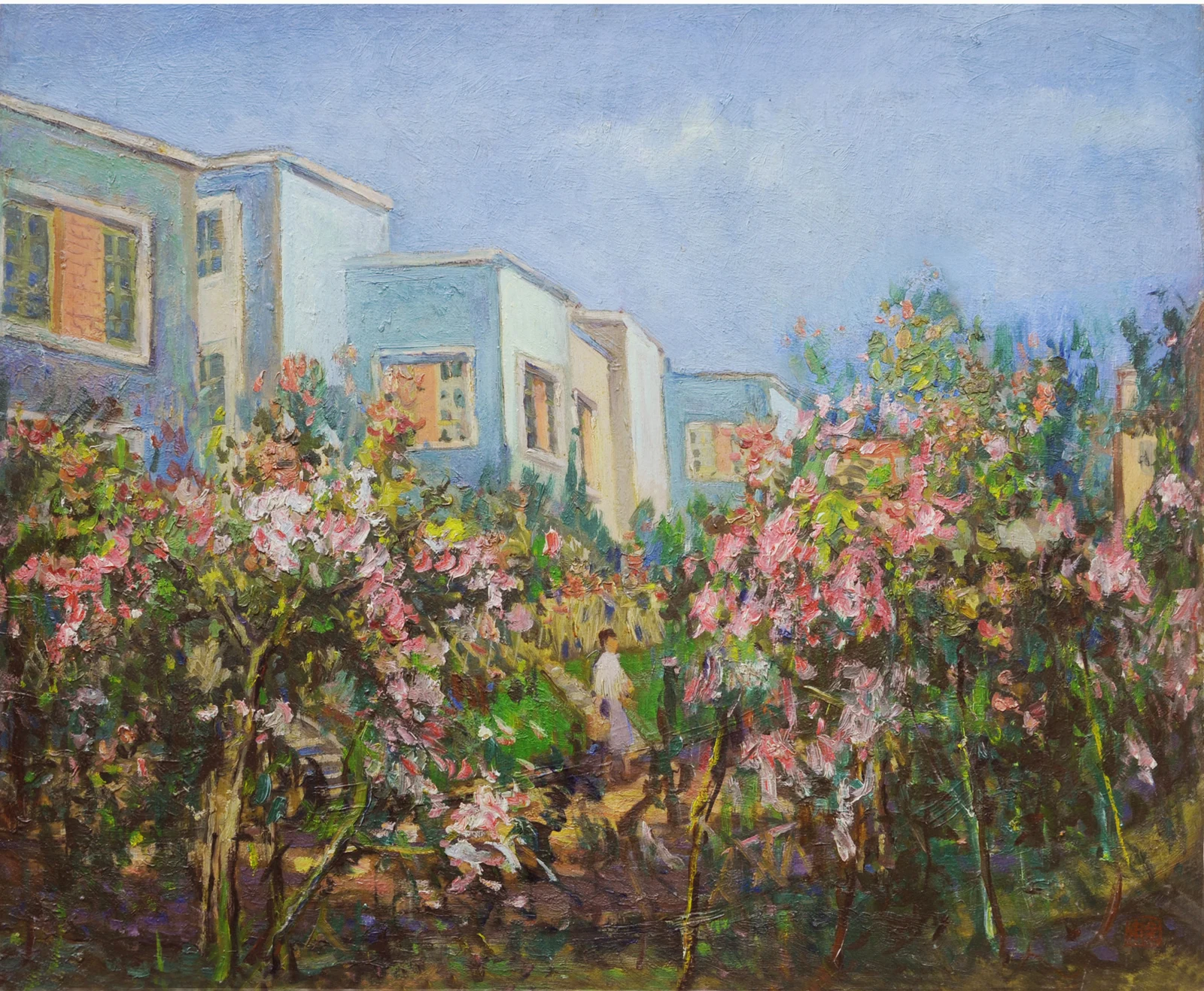
When we moved in in 1956, the surroundings were peaceful and particularly suitable for artistic work, so we stayed for decades. My father liked growing flowers and plants, and often tended them in the courtyard when he was not working.
Read the Chinese original English translation: draft
1956年我们入住时环境清幽,特别适合艺术创作,因此在此居住了数十年。父亲平时喜欢种花养草,工作之余,常在院子里打理花草。
English translation is a draft awaiting human review.
New Village Memories: Oral Histories of Guangzhou’s Huaqiao Xincun · Yu Jinsen · p. 81 (PDF page 93)
017Personal recollectionDuring life in the neighbourhood
A painter and his neighbours
My father was quiet by nature, but many well-known people lived in Huaqiao Xincun, and some friends from the cultural world visited him. The celebrated Cantonese opera performer Hung Sin-nui lived opposite and often dropped by, calling him “Uncle Yu”. He also painted her portrait.
Read the Chinese original English translation: draft
在社交方面,父亲本性喜欢安静,不过华侨新村居住着许多知名人士,仍有些文化界朋友往来。著名粤剧演员红线女因为住在对面,经常过来串门喊他“余伯”,父亲还为她画过肖像。
English translation is a draft awaiting human review.
New Village Memories: Oral Histories of Guangzhou’s Huaqiao Xincun · Yu Jinsen · p. 82 (PDF page 94)